Introduction to bookkeeping and accounting: 2 5 T-accounts, debits and credits Open University

equity accounts

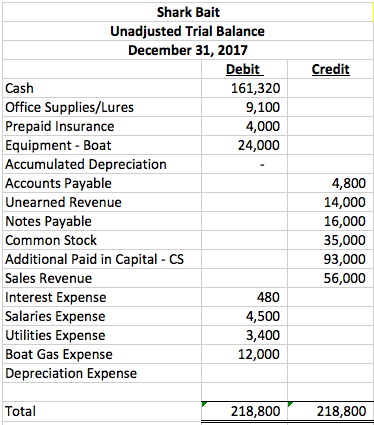
Balance sheets are commonly prepared in a vertical format of the accounting equation. This gives the owners clear information about the assets of the business, the liabilities of the business and the capital or owner’s interest in the business. The balance sheet is normally produced at the end of each trading or financial year and is a snapshot of the financial position of the business on the last day of the financial year. From the trial balance it can be seen that the total of debit balances equals the total of credit balances. This demonstrates that for every transaction the basic principle of double-entry accounting has been followed – ‘for every debit there is a credit’. The figures on your company’s financial statements tell only a small part of the story even though they reflect the bigger picture.

T-Accounts

Pacioli devoted one section of his book to documenting and describing the double-entry bookkeeping system in use during the Renaissance by Venetian merchants, traders and bankers. This system is still the fundamental system in use by modern bookkeepers. A T-Account can be created by manually drawing out the two columns, labeling each one as Debit and Credit. Alternatively, many accounting software packages allow users to enter accounts they wish to track and automatically generate a T-Account.

Journal Entry 1

Brief Exercise 8-12 Richman Corp. had a beginning balance in accounts receivable of $75,600 and an ending balance of $97,500. Prepare journal entries for each of the following January activities, and post results to the relevant T-accounts. Debit cards and credit cards are creative terms used by the banking industry to market and identify each card. From the cardholder’s point of view, a credit card account normally contains a credit balance, a debit card account normally contains a debit balance. A debit card is used to make a purchase with one’s own money.

  • How do we know on which side, debit or credit, to input each of these balances?
  • Whenever cash is received, the Cash account is debited .
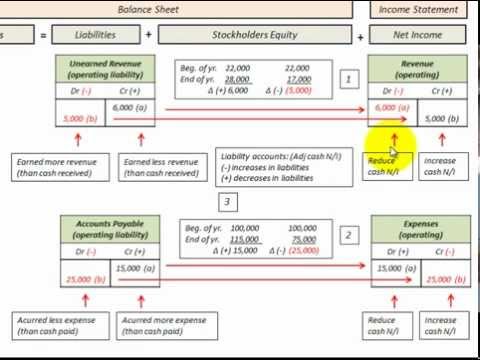
  • T-accounts are visual aids to double-entry accounting, representing how one transaction affects two separate accounts.
  • The dollar value of the debits must equal the dollar value of the credits or else the equation will go out of balance.
  • Cash was used to pay for salaries, which decreases the Cash account.
  • Let’s illustrate the general journal entries for the two transactions that were shown in the T-accounts above.

While a https://bookkeeping-reviews.com/ entry is a record of a single transaction in chronological order, showing the debits and credits of each account affected. It lists all the accounts and their balances, including debit and credit entries. It exists to ensure that the total debits equal the total credits, indicating that all transactions have been recorded accurately. T-accounts are used to track individual account balances and transactions, while trial balance summaries are used to ensure the overall accuracy of a company’s financial records. Another way to visualize business transactions is to write a general journal entry. Each general journal entry lists the date, the account title to be debited and the corresponding amount followed by the account title to be credited and the corresponding amount. Let’s illustrate the general journal entries for the two transactions that were shown in the T-accounts above.

Alert: highest cash back card we’ve seen now has 0% intro APR until 2024

Accountants and bookkeepers often use T-accounts as a visual aid to see the effect of a transaction or journal entry on the two accounts involved. Accruals are revenues earned or expenses incurred which impact a company’s net income, although cash has not yet exchanged hands.

  • This tool is shaped like a “T” and lists debits on the left side and credits on the right side.
  • A T-account looks like the letter “t.” Each T-account has a heading at the top identifying what account it belongs to.
  • Gift cards have become an important topic for managers of any company.
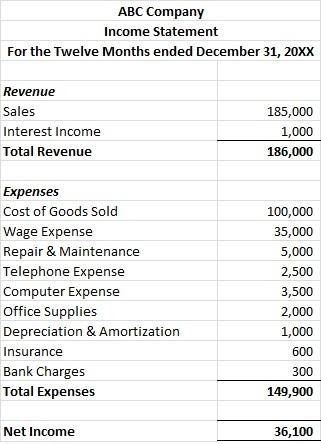
  • Income statements and revenue accounts can also be recorded as T-Accounts.

This money will be received in the future, increasing Accounts Receivable. Therefore, Accounts Receivable will increase for $5,500 on the debit side.

General Ledger Accountant Job Description Denver Recruiting

Accountant job description

Accountants work with business leaders in small companies or with managers in large corporations to ensure the quality of their financial records. Accountants may also collaborate with individual team leaders to retrieve and audit financial records throughout the year. To exceed expectations in the situation of senior accountant, and to set yourself in a place to propel, you have to have those qualities mentioned above. Working knowledge of financial software tools to quantify and illustrate routine financial reports, statements, and/or projections. Analyzes, reconciles, balances, and maintains accounting records; develops budgets and special financial reports.

  • Take a few short sentences to really set your company apart from competing job postings and sell yourself to job seekers.
  • By reviewing job description examples, job seekers will be able to identify what technical and soft skills, credentials, and work experience matter most to an employer in your target field.
  • However, there are other career options worth considering beyond a Certified Public Accountant.
  • Complying with all company, local, state, and federal accounting and financial regulations.

Accountants help businesses make financial decisions by collecting, tracking, correcting, and communicating the financial position of the company. A good accountant is not just someone with finance skills but also an expert in human relations and communication. They must have exceptional integrity as they oversee financial records, and they must have strong communication skills to present detailed information in a manner that’s easy to understand. Analyzing and interpreting financial information, general ledger accountants provide assurance that information complies with professional and regulatory standards. They ensure that data supports budgeting and forecasting requirements, and they provide solutions to control issues.

Accountant responsibilities include:

You’ll want to begin your Accountant job description by introducing prospective candidates to your company and highlighting what makes working in your office unique. Take a few short sentences to really set your company apart from competing job postings and sell yourself to job seekers. An Accountant takes care of all financial matters within a company, like keeping and interpreting financial records. They may oversee responsibilities like reconciling bank statements and calculating payroll to keep their company in strong financial standing.

Learn which technical skills employers are looking for, how to improve yours, and how to list them on your resume. Accountants looking to advance their careers may also pursue other voluntary certifications. These certifications include Certified Management Accountant , Certified Internal Auditor , and Certified Bookkeeper . Each designation has various requirements, including past education and career experience. Additionally, these certifications have continuing education requirements that must be met every few years. Accountants are also tasked with making recommendations to various departments or C-suite staff regarding company resources and procedures. These recommendations are meant to provide solutions to potentially costly business financial concerns or problems.

Bank Accountant Tools of the Trade

As a senior accountant, you will probably supervise a group of junior accountants. You ought to have strong good communication skills, organizational, technology, and analytical abilities utilizing Microsoft Excel. Furthermore, Accreditations from certified management accountant or certified https://business-accounting.net/ public accountant also preferred. Accountants use their education and experience to create or examine the accuracy of financial statements. Accountants ensure all financial records and statements are in line with laws, regulations, and generally accepted accounting principles .

Are You Keeping Too Much Money in the Bank?

Accidentally Charged Closed Bank Account : personalfinance

I think there are probably 4 common ways to overdraw your checking account. Bank of America currently charges $35 per transaction overdrawn with a limit of four per day. That could mean you could pay the bank up to $140 per day. If your bank closes your account, you’re not out of the clear. You’ll also be notified of the outstanding balance, which you’ll have to pay.

You’ll want to halt all direct deposits to prevent funds from going into an account you can’t currently access. If a closed account receives direct deposit funds, the money may be returned to the sender. Realizing your bank closed your account is one of the most frustrating situations but even more Accidentally Charged Closed Bank Account : personalfinance so if you had money in the account. No matter what the reason for the bank closing your account is, it is required to return your money. The bank may deduct any unpaid fees or charges from your balance before crediting it to your account. The amount of the overdraft fee varies from bank to bank.

Can a foreigner open a bank account in the US?

All your other money—because you’re continuing to save, right? —should go into investments, where it might have a chance to grow and accumulate faster. If it’s invested, https://business-accounting.net/ it’s hopefully growing, moving you a little closer to your financial goals. Anastasio says it depends on how much you’re comfortable having in reserve.

How do I get my money back from a closed bank account?

  1. Contact the bank.
  2. Settle the balance (or request a check).
  3. Request to reopen the account.

If you’ve bounced checks, then you may also have to pay returned check fees as well. Fees and policies vary across financial institutions, so be sure to contact yours to get an understanding of the fees they’re charging you. You’ll be responsible for paying any fees in addition to the negative balance on your account. U.S. Bank stopped charging nonsufficient funds fees in January 2022. It also increased the amount your account can be overdrawn without incurring a fee from $5 to $50.

Don’t spend money that’s not in your account

A few days later, PayPal deposited 1¢ in the account, which automatically opened it. I found out about it yesterday, when a friend whose house I’d lived in at the time called to tell me they were still sending bills to the house. So if the account had been closed recently, the charge could have reactivated it. Note that some financial institutions may still count these toward a monthly limit if your bank has one. Double-checking with your bank first may help prevent accidentally exceeding your allotted transactions. Unless you know you have the money, don’t make a purchase. Don’t make payments if you’re anticipating a deposit, but it hasn’t hit yet.

Accidentally Charged Closed Bank Account : personalfinance

By making a deposit on the same day a transaction sends your balance below $0, you might be able to narrowly avoid an overdraft fee if the deposit clears before the pending purchase. But bank policies vary in situations like this, so don’t count on this tactic to work with every financial institution. The next step you should take is to manually balance your checking account. This will help you figure out how much money you’ll need to bring your account back into the positive immediately. Don’t forget to include any returned check or overdraft fees, or charges or checks that haven’t hit your account yet.

Is your bank account’s overdraft protection worth it?

In fact, the way instant payments and other conveniences work probably make it more important than ever to spend a few minutes per month reconciling your accounts. A financial advisor has the insight to provide excellent guidance as you select a bank and opt for various bank account options.

A worker charges a customer’s card for $453,000 instead of $4.53 … – NewsBreak Original

A worker charges a customer’s card for $453,000 instead of $4.53 ….

Posted: Fri, 20 Jan 2023 04:52:24 GMT [source]

Capital Lease vs Operating Lease

criteria

Since you’re not paying for it all at one time, this is more difficult to calculate. In general, a capital lease is one in which all the benefits and risks of ownership are transferred substantially to the lessee. This is analogous to financing a car via an auto loan — the car buyer is the owner of the car for all practical purposes but legally the financing company retains title until the loan is repaid. For lessors, the capitalized lease results in higher periodic payments. There are a number of reasons why you might want to get a capitalized lease.

  • Capital leasing is a contractual agreement in which a grantee acquires the right to use a capital asset for a specified period of time without obtaining full ownership, in exchange for a periodic payment regardless of the tax status of the transaction.
  • A capital lease is a lease in which the lessor only finances the leased asset, and all other rights of ownership transfer to the lessee.
  • ASC 842 does not establish a materiality exception or threshold, but materiality exemptions are allowed overall by US GAAP. If an entity has a materiality threshold for fixed assets, a similar methodology may be applied to leases as well.
  • It is the lease contract for the use of an asset and a period covers almost more than 75 percent of the life of the asset, whereas an operating lease is for a shorter term which is less than 1 year.
  • The Internal Revenue Service may reclassify an operating lease as a capital lease to reject the lease payments as a deduction, thus increasing the company’s taxable income and tax liability.
  • An operating lease is a contract that permits the use of an asset but does not convey ownership rights of the asset.

The interest expense recorded on the income statement is equal to the difference in the imputed interest expense between the prior and current year. Ownership Transfer → Once the lease term ends, the ownership of the asset is transferred from the lessor to the lessee. Access financial statement examples for before and after the new lease standard.

New Accounting Rules for Leases

The https://personal-accounting.org/ transfers ownership of the asset to the lessee by the end of the lease term. However, this means that more depreciation expenses are in the later years of the lease, which could lead to a higher tax bill.

  • He currently researches and teaches economic sociology and the social studies of finance at the Hebrew University in Jerusalem.
  • Ongoing operating lease journal entries will record a lease expense as usual, as well as reducing the lease liability and ROU asset balance over the life of the lease.
  • Under a capital lease, the leased asset is treated for accounting purposes as if it were actually owned by the lessee and is recorded on the balance sheet as such.
  • See Statement of Financial Accounting Standards No. 13 for more details of classification and accounting.

The Capital Lease Definition entry would not be required at this point, but at the end of the year upon payment. A capital lease is a lease in which the lessor only finances the leased asset, and all other rights of ownership transfer to the lessee. This results in the recordation of the asset as the lessee’s property in its general ledger, as a fixed asset. The lessee can only record the interest portion of a capital lease payment as expense, as opposed to the amount of the entire lease payment in the case of the more common operating lease. To be classified as an operating lease, the lease must meet certain requirements under generally accepted accounting principles that exempt it from being recorded as a capital lease. Companies must test for the four criteria, also known as the “bright line” tests, listed above that determine whether rental contracts must be booked as operating or capital leases. If none of these conditions are met, the lease can be classified as an operating lease, otherwise, it is likely to be a capital lease.

How Does Equipment Leasing Work?

A lease is classified as a finance lease if it “transfers substantially all the risks and rewards incidental to ownership of an asset.” There are no strict guidelines as to what constitutes a finance lease, however guidelines are provided within the standard. IFRS does not provide a rigid set of rules for classifying leases and there will always be borderline cases. It is also still sometimes possible to use leases to make balance sheets look better, provided that the lessee can justify treating them as operating leases. Understanding how a lease is classified, the key differences from ASC 840 to ASC 842, and its impact to the business will equip your company for success under the new lease accounting standard.

A long-term lease in which the lessee must record the leased item as an asset on his/her balance sheet and record the present value of the lease payments as debt. Additionally, the lessor must record the lease as a sale on his/her own balance sheet.

Capital Lease Accounting Criteria (U.S. GAAP)

However, unlike current GAAP—which requires only capital leases to be recognized on the balance sheet— the new ASU will require both types of leases to be recognized on the balance sheet. Do you have questions about finance leases and want to speak to an expert? Post a projecton ContractsCounsel today and receive bids from business lawyers and finance lawyers who specialize in finance lease agreements.

option

They are recorded in financial statements under the cost of sales or operating expenses. This is different from a finance lease, where the payments for the leased asset are recorded as an amortization expense and interest expense. Accounting for capital leases is complicated because you are treated as the owner of the leased item.

Get the latest and most important lease accounting information right to your inbox. The lessee is reasonably certain that they will exercise a purchase option at the end of the term of the lease. A transferral of ownership of an asset to the lessee at the end of the term of the initial lease.

Payment and Credit Card Processing Options for Your Business M&T Bank Merchant Services

service

A variety of factors are taken into Credit Card Processing such as PCI-compliance fees, chargeback fees, assessment fees, interchange fees, and annual account fees. Quickbooks Payments does not charge monthly fees or setup fees. The transaction fees vary depending on whether the card is swiped (2.4%), invoiced (2.9%) or keyed (3.4%), plus a flat $0.25 fee per transaction. An added benefit of QuickBooks Payments is our instant or next-day deposits. E-Commerce sites are websites that buy or sell things online, often via the company’s website or an online marketplace. Customers can add items to a virtual shopping cart, enter their payment details, and make a purchase. They can also choose to store their payment details for repeat purchases to simplify the ordering process.

It typically takes 24 hours to three days to settle a credit card sale. It depends on the merchant account provider and the type of merchant account you have. Thanks to advances in payment technology, the turnaround to clear credit card sales is faster than it used to be. If you choose a direct processor, like Chase – which is a combined processor and acquiring bank – you can expect shorter time frames.

Square: Best Credit Card Processors for Growing Businesses

We’ll send you an easy-to-understand comparison with your projected monthly and annual savings with the Professional Solutions Program. If we can’t meet or beat your existing program’s pricing, you’ll get a $100 gift card.

A front-end processor handles up-front card authorization, connectivity to card associations, and network authorization. A back-end processor receives and forwards settlement batches to the issuing banks on a regular schedule. Process credit cards and automatically record payments in QuickBooks. The issuing bank also subtracts any interchange fees for the card association and then transfers the remaining funds to the merchant’s bank. By the end of that business day, the merchant’s POS terminal batches all approved authorizations for payment processing.

Credit Card Processing Equipment and Systems

This is crucial for ensuring customers can quickly and easily checkout. With flat-rate pricing, businesses pay one low rate based on the type of sale, with fees typically ranging from 2.5% plus 10 cents to 3.5% plus 30 cents per transaction.

ACH processors let you even set up automated, recurring billing to help increase timely payments for customers who pay for a product or service on an ongoing basis. Tomorrow’s business world will be more automated and artificially intelligent than even George Orwell could have imagined, but analytics and AI are already raising profits today. The days when credit card payment processing was simply a method of payment are over. Chargebacks happen when a customer disputes a charge from your business and asks the card company to delete it. Chargebacks can cause major issues because disputed funds are held from merchants until the card issuer decides what to do.

Chase Payment Solutions: Best Credit Card Processor for E-commerce Businesses

https://intuit-payroll.org/ing card payments is a must for all businesses, whether brick-and-mortar or online. Choosing the best credit card processor can be a complex process for business owners, though, with complicated pricing and fees to navigate. We found the best credit card processors for every business type and size, including the best prices, features and overall ratings. Browse our top picks to find the best credit card processor for your business. Each time you accept a credit card payment as a merchant, you’ll pay processing fees based on the total amount of that transaction, including the sales tax. We suggest working with your accountant or tax professional to determine how you can deduct those fees from your taxable income. Clear off counter space at work by making your PC a payment processing terminal.

  • The majority of merchants and accounts receivable departments accept card-not-present credit card transactions.
  • Power its potential with one of our business credit cards, like Ink Business Preferred℠, Ink Business Unlimited℠ or Ink Business Cash℠.
  • PayPal stands out by offering the best merchant services for small businesses with low transaction volumes.
  • For example, rewards and corporate cards will have a higher interchange rate and fee than a debit card.
  • While brand alone was enough before this point to bring in customers, this reward system created stiffer competition.

Chargeback Fee – When a consumer disputes a transaction, the money will be refunded to the consumer and you as the merchant will be charged this fee, usually $20-$40 per occurrence. As a merchant, you will have the opportunity to respond to the chargeback and prove the transaction was authorized, but you will still be charged this fee. Authorization Code – This is usually a six or seven digit number returned by the issuing bank in response to a card being processed. In 1966, the Bank of America’s BankAmericard expanded its reach to serve customers outside of California and Interbank Card Association , known today as MasterCard, debuted as a competitor. Simplify the process, save time with online or mobile payroll entry, and automate payroll tax administration. SumUp’s software development kit 9SDK functions on Android and iOS. Transaction IDs are generated for each payment, and sensitive information is kept off your phone.

Businesses use this form to charge recurring payments to customer credit cards. And if you ever need to prove your had permission to charge the card, you have it. Your merchant service provider handles your credit card transactions on the front and back end. They’ll also handle your communications with card associations, processors, and your bank. Now that we have discussed what a credit card processor is, let’s discuss how credit card processing works to securely process payments.

  • Some processors advertise surcharging programs that pass processing fees to your customers.
  • It typically takes one to three business days to settle up a payment.
  • Virtual terminals come in handy to key in credit card payments over the phone or take payments from in-person customers if you don’t have your mobile card reader around.
  • A batch is typically sent out at the end of the business day but a merchant can choose any time to close and send out batches.
  • From movies to meal kits, people love the ease and delight of subscription services.
  • Search by solution name, region, solution type, industry or keyword.